Are we running to plan?
Plan every station, send jobs to the floor, and see what actually ran.
Most plans live in a spreadsheet or the ERP, and the shop floor finds out what to run from a printout or a shout across the factory. When plans change, the paper doesn't.
BUSROOT puts production and maintenance on one Gantt for every station. Jobs go straight to the Operator Interface, you can see how much capacity is booked ahead, and you can compare what ran with what was planned.
Why it matters
A plan only helps if the shop floor follows it, and you can see when it doesn't.
One live plan
Operators see the jobs for their station, in order, so nobody's working from an old printout.
Capacity at a glance
See how much of each station's shift time is already booked for the weeks ahead.
Plan versus actual
See, window by window, whether each station was running when it was meant to be.
What it does
Plan the work.
Check it ran to plan.
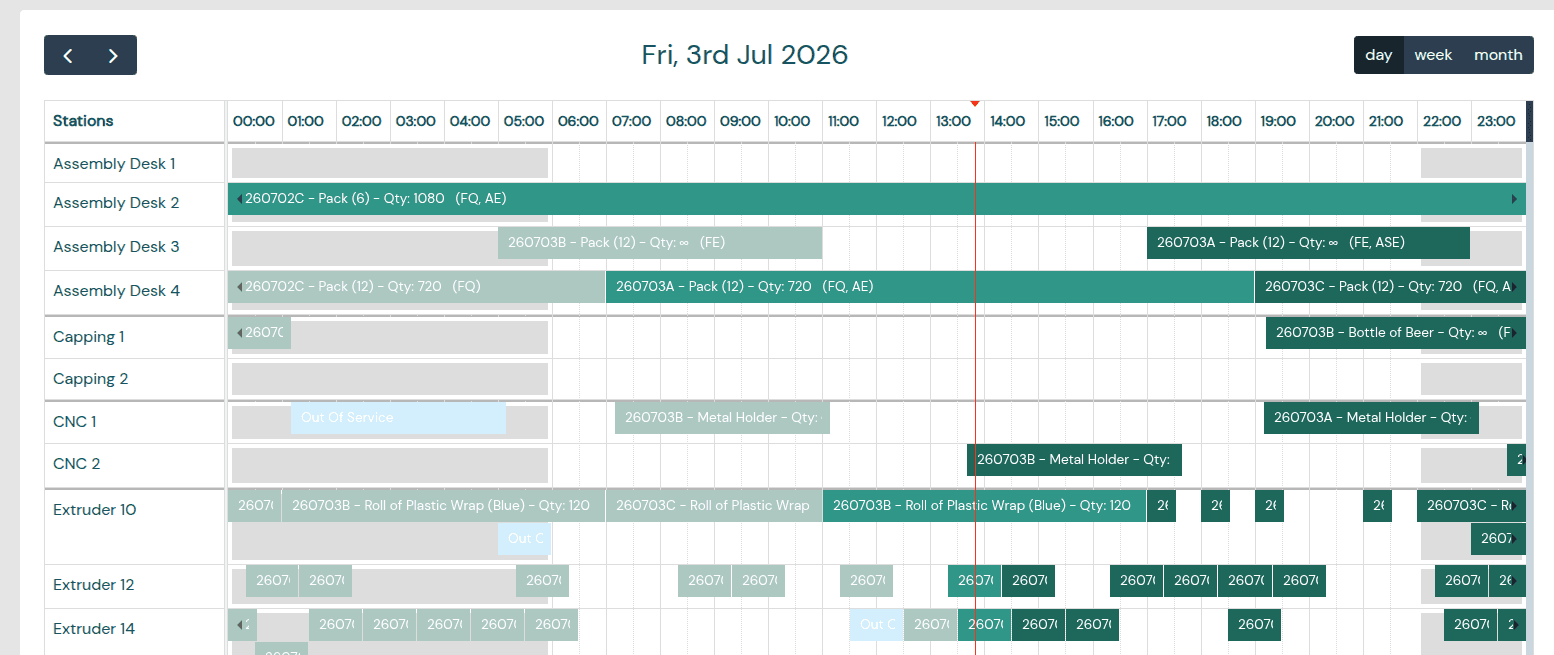
Gantt for every station
Add, move, resize and prioritise production and maintenance schedules on one timeline.
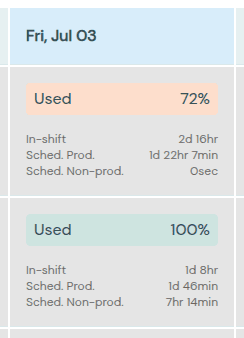
Schedule Capacity
How much of each day's shift time is scheduled, so you can spot stations that are under- or over-booked.
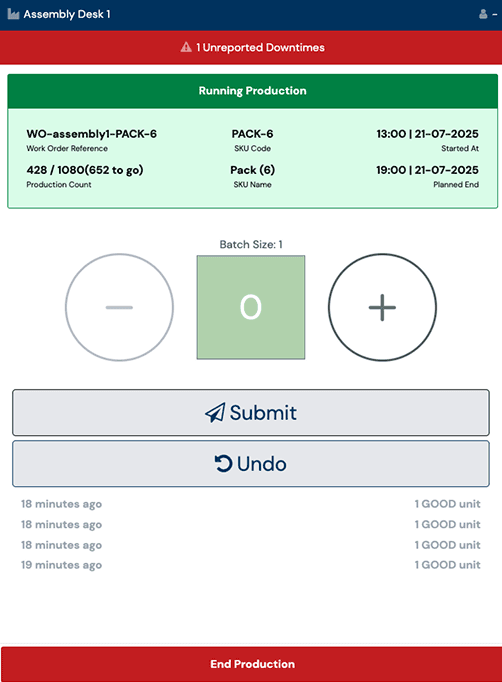
Jobs at the station
Operators see their schedules in the Operator Interface, then start and end them there.
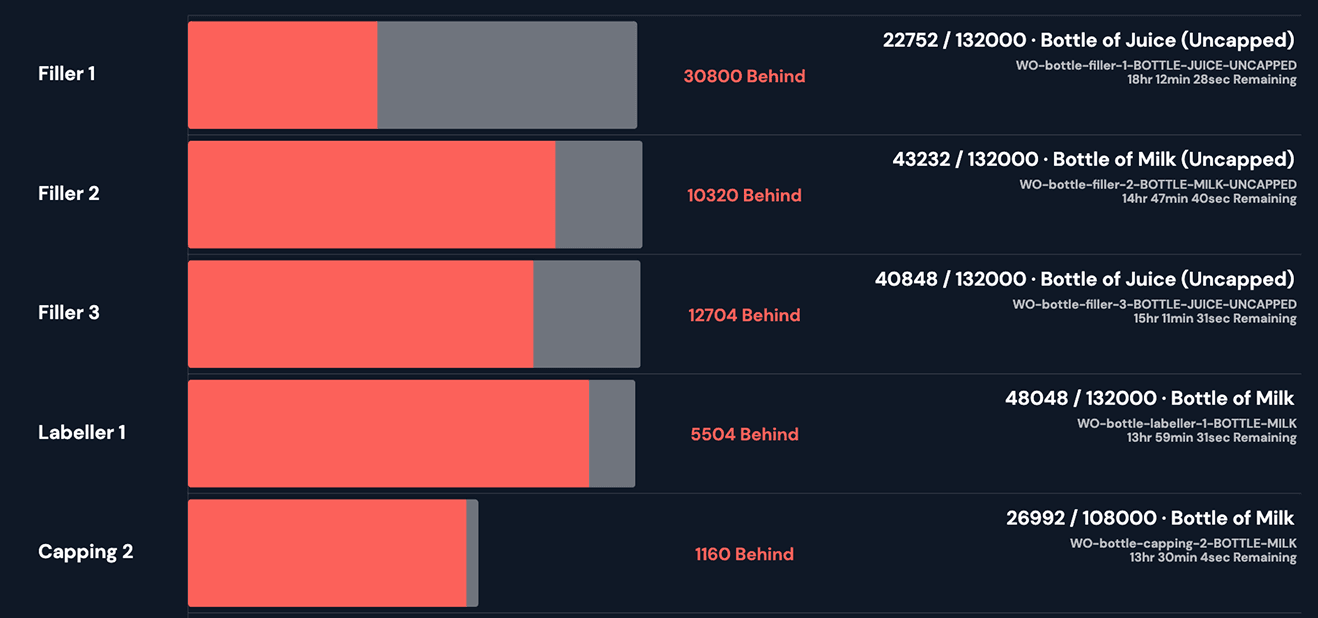
Production Progress
Each running job's quantity against target on a big screen, so the floor can see if it's behind.
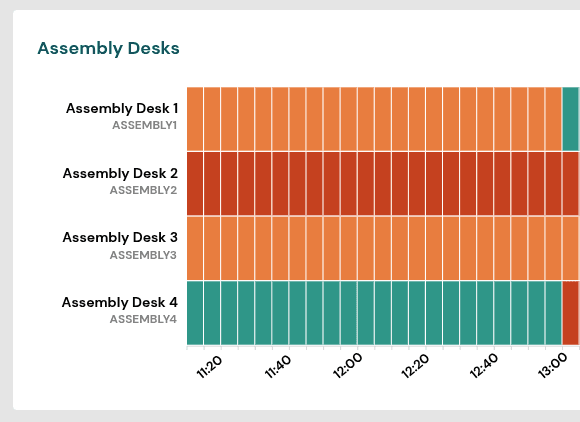
Productivity against schedule
The Pulse Chart shows whether each station was productive when it was scheduled to be.
Where you'll see it
The BUSROOT tools that bring Scheduling to your team.
ControlRun the shift
Gantt and schedules
Create, upload, order and prioritise production and non-production schedules.
Schedule Capacity
A forward-looking view of how much shift time has been scheduled.
Production Progress
A large-screen board showing each running schedule's quantity against target and its estimated finish time.
Operator Interface
The operator's screen at the station, in any modern web browser. Operators give downtime reasons, start schedules, count and correct production, and complete Tasks.
OptimiseFind the pattern
Pulse Chart
A coloured block for each time window and station, for spotting patterns within a shift.
DevelopersIntegrate with your systems
API and SDK
Full API coverage for inputs and outputs, and the busroot-sdk package for JavaScript and TypeScript.
FAQs
Everything you need to know to get started.
How do schedules get into BUSROOT?
Three ways, and you can mix them. Add them by hand on the Gantt, upload a CSV or XLSX file, or send them from your ERP or planning system through the API. If your planning system exports a different file layout, send us an example and we can set up a mapping for it.
Do I have to plan every job to get started?
No. You can add one continuous production schedule to each station. It has no quantity and no end time, so it runs until you end it. That's enough to start monitoring, and you can plan in more detail later.
Can I plan maintenance and changeovers too?
Yes. Non-production schedules cover planned time when a station isn't meant to produce, such as maintenance, changeovers or cleaning. That time isn't counted as downtime and doesn't count against OEE.
What do operators have to do?
Operators see the station's schedules in order in the Operator Interface. Depending on how you set each schedule up, it starts and ends on its own at the planned time, or the operator starts and ends it. You can also let operators start an ad hoc job when nothing is planned.
What happens when plans change at short notice?
Prioritise a schedule and it moves to the top of the operator's list, highlighted, without changing its planned start. If an urgent job comes in halfway through a work order, operators can cut the running schedule short and BUSROOT puts the remaining quantity back in the plan.
If I upload the plan again, will I get duplicates?
No. A schedule is identified by its station, SKU and planned start. If an uploaded row matches an existing schedule, that schedule is updated rather than duplicated. Rows that fail are listed with the reason, and the rest are uploaded.
Why does the schedule matter for my other figures?
Every other capability is measured against scheduled time. OEE and downtime are measured over scheduled production time, and production is only recorded while a production schedule is running.

“Using BUSROOT has helped us gain invaluable insight into our cut shop operations as part of our digital roadmap improvements. We have been able to increase our utilisation, output and efficiency without increasing the headcount.”

Matthew ‘Bobby’ Taylor, Senior Engineering Manager
TEREX
Ready to boost performance and cut waste?
Book your demo and see how BUSROOT unlocks visibility, accountability, and real-time action - without disrupting your operation.